
LBR received a physical review copy of the Lord of the Rings 5e Core Rulebook from Free League Publishing to review this game.
The Lord of the Rings 5e Core Rulebook is a comprehensive set of rules for tabletop roleplaying in Middle-earth. It doesn’t teach 5e itself, but instead uses the system as a foundation for new gameplay ideas based on Tolkien’s beloved setting.
In The Lord of the Rings 5e RPG, Loremasters (GMs) and player-heroes build an adventure together, set between The Hobbit and LOTR.
The core book includes rules to create unique characters, explore the world, discover custom Treasure and Landmarks, and more. It also features some Loremaster tips, useful lore from the source material, and other gaming essentials.
This book has been available for purchase for a while via the Free League shop, so you can already find quite a few supplements. Also, I recently got the chance to review the Starter Set for LOTR 5e, ideal for interested beginners!
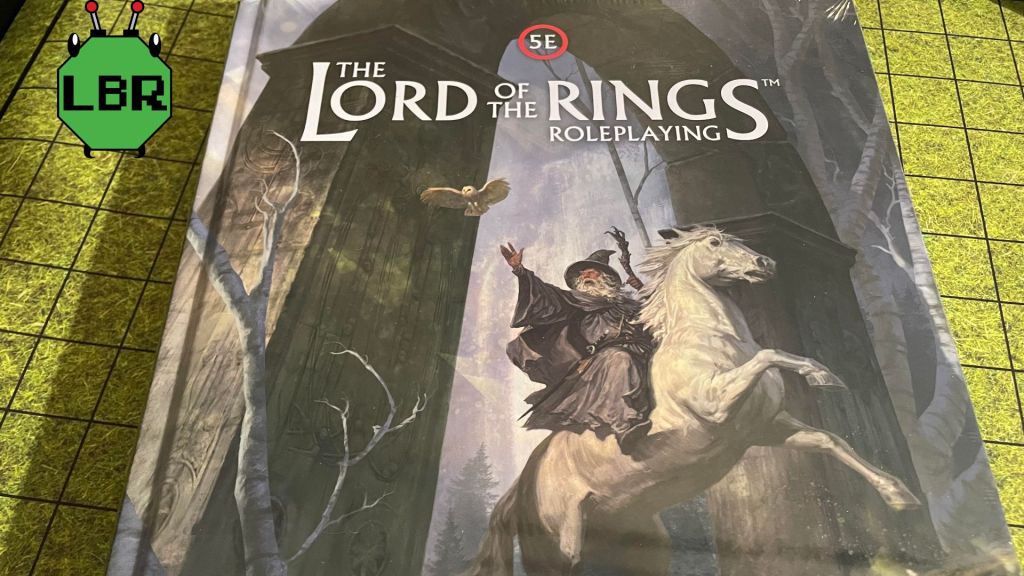
From the onset, dramatic and detailed artwork alone stresses just how dedicated this game is to both Tolkien and his source material. The maps, characters, and other examples are certainly gorgeous! But you’ll also find many borders, frames, and fonts that fans expect to see when they feel compelled to enter Middle-earth via 5e.
As Loremasters and players alike learn or consult the rules, the artwork keeps immersion intact, a key ingredient in any RPG. Similarly, I appreciate all of the quotes, which serve as both justification from the designers and inspiration for the player’s imagination.
The book also makes its purpose very clear up front, reminding players that it adapts the popular One Ring RPG and demands serious 5e knowledge. You should be pretty comfortable with 5e before you invest in this. For example, the game uses 5e combat, but doesn’t include those rules.
Travel & Down Time
The Lord of the Rings 5e truly supports an epic storytelling scope.
After completing the book, its emphasis on journeying itself really stood out to me. The environment is its own character, more unforgiving and elaborate, encouraging players to travel wisely.
Long Rests are tougher to come by, the land can affect events and Eye Awareness, and you’re more easily encumbered. This turns the distance between ordinary scenes into surprising opportunities for content.
I feel that Journeys give your adventure structural integrity without losing fluid gameplay. They also let your Company further interact with the surroundings, and naturally share the spotlight—important for group dynamics.
There are also rules for seasons and their corresponding changes. It’s a powerful storytelling tool, and tracks the passing of time, again reinforcing an epic tale.
I found the Fellowship Phase the most fascinating addition to the 5e system. It isn’t just a chance to regroup after each adventure. It transforms your traditional “down-time”, with basic accounting and reallocating and so forth, into attractive themed gameplay!
There are many worthwhile undertakings to complete for specific characters. It also adds Yule, which marks the end of a year, with special undertakings like raising an heir (successor). This is a brilliant way to create legacy, and explore player campaigns that span extensive real time.
Many of the game systems, such as Patrons and Landmarks, also keep the pacing on point.
Magic & Spells
Smart limitations are a cornerstone for RPG theming, leading to consistent and concrete realities.
As so many players and reviewers already point out, LOTR 5e plays into the low-magic setting of Middle-earth. Specifically, I feel that the designers effectively used Craft, rewards, and other elements as balanced substitutes for familiar 5e magic.
This way, you can still enjoy similar progression and nuances of a magical nature, without expressly using something like Mage Hand.
For example, Rune-craft lets you spend a craft slot during Fellowship Phases to inscribe runes of power on select items. There are also Magical Successes, which can make the extraordinary appear to be outright magic.
Even enchanted rewards can either glow or simply have fine craftsmanship. It’s a clever and practical take on normal spells.
Personality & Group Dynamics
This game delivers so many ways to invest in your individual character and the Company as a whole. I am very pleased with the aspects that promote teamwork, such as your Fellowship Rating.
This rating gives your Company little perks while you play, welcoming players to form an actual bond. You can also write different types of songs about your adventures, and then use them as tactile advantages.
Meanwhile, ideas like predestination can help carve out a meaningful path for any character. It makes you feel like part of a whole in Middle-earth, a great incentive to discover more on a personal level.
In general, LOTR 5e generates great dialogue. Councils are a terrific system, organizing scenes of negotiation into something fair and defined. Like so many features of this game, it also properly falls in line with various Tolkien themes.
I consider Shadow a natural fit for 5e gameplay, always testing the characters through their experiences and decisions. Flaws create realism, and Shadow Path progresses your character as much as any new skill in roleplaying terms.
Resisting the Shadow, and recovering through scars or bouts of madness is an excellent adaptation of Tolkien’s work. Players need to rely on each other more amid potential betrayal, doubt, and so forth.
Resources
I do wish there were a wider supply of potential cultures and callings, but this book alone is plenty serviceable for casual gamers. The permutations you can build are already pretty vast. The virtues, traits, and backgrounds are a satisfying take on 5e construction.
I also hoped for an example adventure, akin to the Starter Set, but you’ll have to find that elsewhere. Fortunately, if you’re just diving in, there are now lots of supplements that this core book promised here and there. For example, Moria was sorely missed.
The Loremaster tips are a fantastic read. The designers readily explore how to approach canon! That’s a serious conversation for anyone who specifically wanted this game for a grounded experience. I am very happy with the book’s suggestions.
The list of adversaries and NPCs is superb, relatively balanced and creatively thematic. They also weave organically into the settings.
Every chapter of the book gives Loremasters and players the flexibility they need to meet unique gameplay preferences. Frankly, I’m impressed by just how patiently the book explores so many niche cases and exceptions for various rules.
Final Thoughts
The Lord of the Rings 5e RPG core rulebook is nothing short of extraordinary. The ebb and flow of the game translates Tolkien’s Middle-earth in equally sensible and fun ways. It’s best reserved for confident 5e fans, and could benefit from its latest expansions, only teased here.
However, personal nitpicks aside! Its deeply-researched content and outstanding game sense should please One Ring and 5e fans alike, a magical success against a nigh-impossible task. The Lord of the Rings RPG is a sophisticated love letter, entertaining game, and an invaluable resource.
Score: 9.5 / 10
Support LBR and artists by reading more of our Tabletop and Video Game posts!
 Leaderboard Reviews